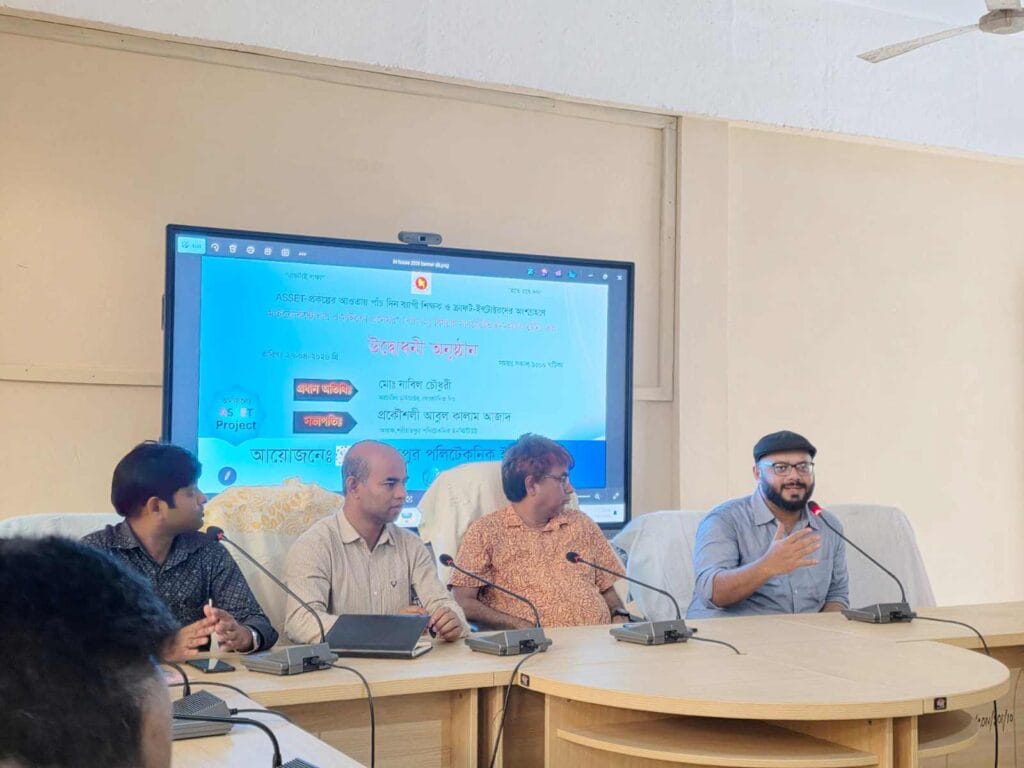
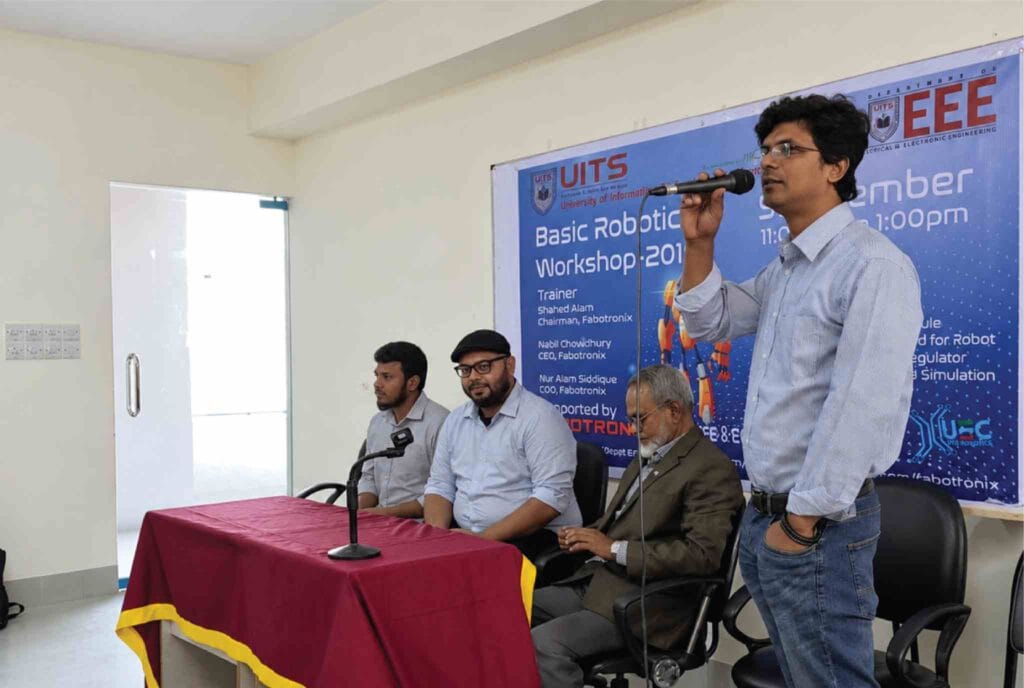
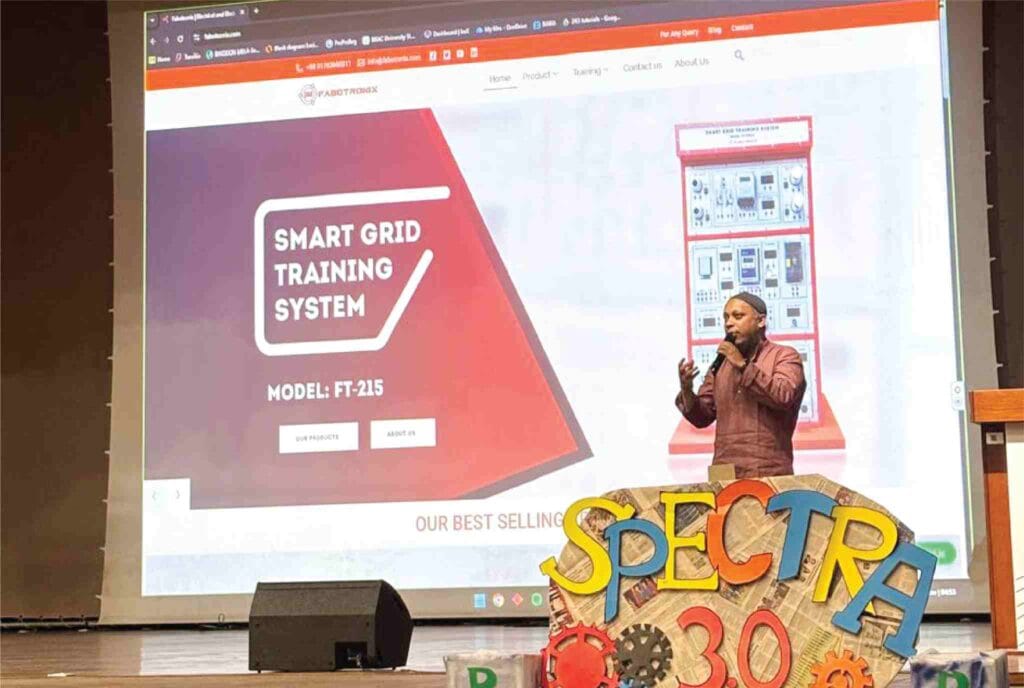
Fabotronix Conducts Robotics Workshop at Stamford University Bangladesh
Fabotronix conducted a hands-on robotics workshop at Stamford University Bangladesh, introducing students to practical robotics, programming, smartphone-enabled control, and real-world engineering applications.
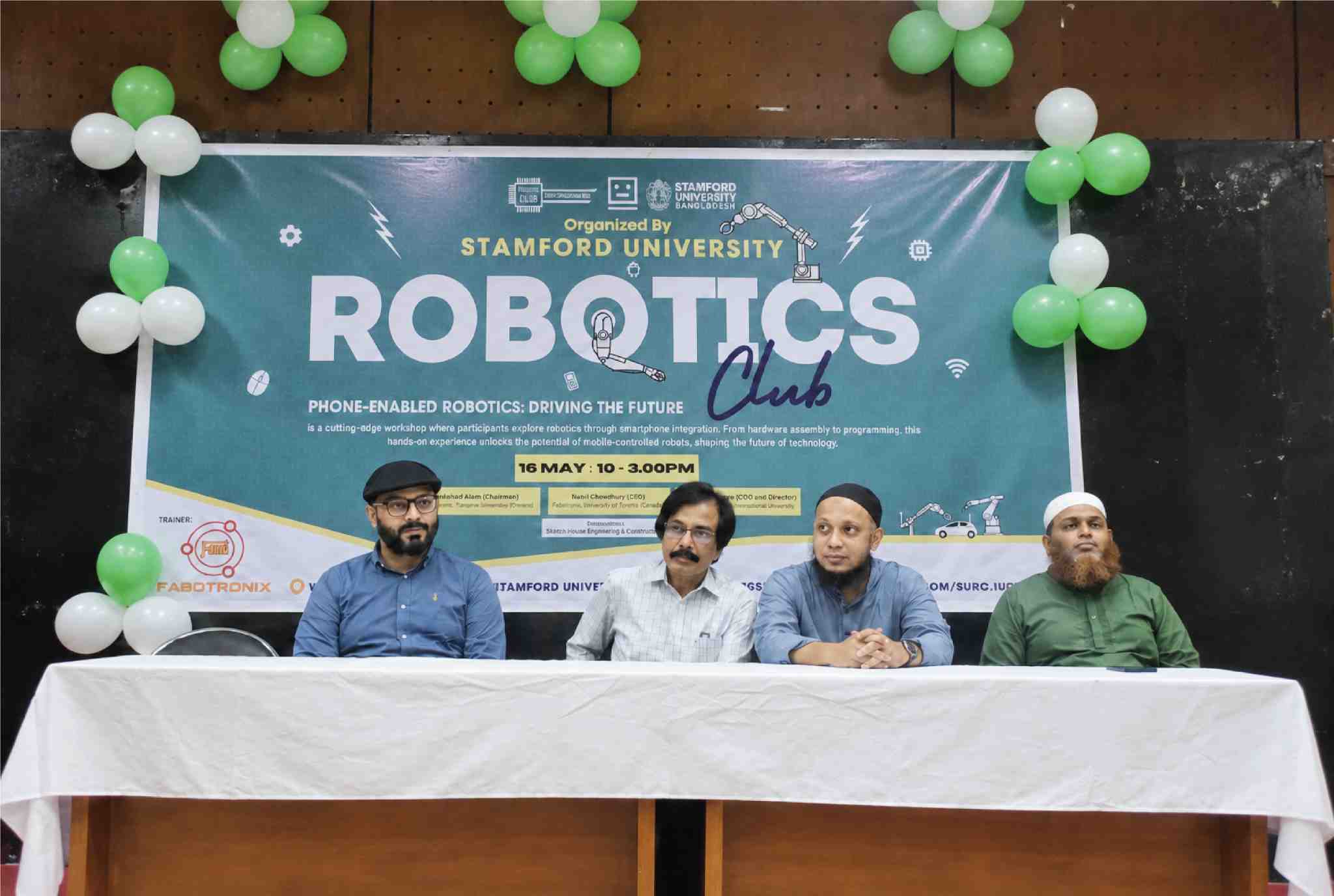
Fabotronix recently conducted a Practical robotics workshop at Stamford University Bangladesh, creating an opportunity for students to explore robotics beyond theoretical concepts and engage with practical engineering applications.
The workshop was designed to introduce participants to the fundamentals of robotics while demonstrating how electronics, programming, sensors, control systems, and mechanical components work together to create a complete robotic system.
For Fabotronix, workshops like this are an important part of our commitment to promoting practical engineering education and encouraging students to develop technical skills through hands-on experience.
Bringing Robotics into Practical Learning
Robotics is a multidisciplinary field that combines electronics, programming, embedded systems, mechanics, control, and problem-solving.
During the session, students were introduced to the basic structure of a robotic system and gained a clearer understanding of how different components interact to perform specific tasks.
The workshop covered practical concepts such as:
- Fundamentals of robotics and automation
- Basic robotic system architecture
- Microcontrollers and control systems
- Sensors and actuators
- Motor control
- Programming concepts used in robotics
- Smartphone-enabled robot control
- Integration of hardware and software
- Practical robotics applications
The objective was not simply to demonstrate a robot, but to help students understand the engineering principles behind its operation.
From Theory to Hands-On Experience
One of the biggest challenges in technical education is connecting classroom knowledge with real-world applications.
Through hands-on activities and demonstrations, students were able to observe how programming commands are translated into physical movement and how electronic components work together inside a robotic system.
This practical approach helps students develop a stronger understanding of concepts while improving their analytical and troubleshooting abilities.
Instead of only learning how a system should work, students get the opportunity to explore why it works, how the components interact, and how problems can be identified and solved.
Encouraging Student Innovation
Robotics provides an excellent platform for students to experiment with ideas and turn concepts into working prototypes.
Workshops like this encourage students to think creatively, develop problem-solving skills, and explore areas such as embedded systems, industrial automation, artificial intelligence, control engineering, and autonomous systems.
By introducing students to practical robotics at an early stage, we aim to build confidence and inspire them to take on more advanced engineering projects in the future.
Industry-Relevant Skills for Future Engineers
Modern industries increasingly rely on automation, robotics, sensors, smart control systems, and connected technologies.
Understanding these technologies gives engineering students an important advantage as they prepare for professional careers.
Practical exposure to robotics can help students build skills in areas including:
- Industrial automation
- Embedded systems
- Electronics
- Control engineering
- Programming
- Mechatronics
- Smart manufacturing
- Research and development
These skills are increasingly relevant across manufacturing, industrial automation, technology development, and engineering services.
Strengthening Industry-Academia Engagement
Fabotronix believes that stronger collaboration between educational institutions and engineering organizations can significantly improve students’ practical learning opportunities.
Through university workshops, technical seminars, industrial attachment programs, educational training systems, and engineering projects, Fabotronix continues to support institutions in creating more practical and industry-oriented learning environments.
Engaging directly with students also gives us an opportunity to understand their interests, challenges, and expectations while sharing real-world engineering knowledge and experience.
Moving Forward
The robotics workshop at Stamford University Bangladesh was another step in Fabotronix’s ongoing journey to make engineering education more practical, engaging, and connected to modern technology.
We appreciate the participation and enthusiasm of the students and everyone involved in organizing the session.
Fabotronix looks forward to continuing its collaboration with universities, polytechnic institutes, students, and educators through more workshops, training programs, technical projects, and practical learning initiatives.
Fabotronix
Engineering • Training • Innovation